Precision Design of Cyclic Peptides using AlphaFold

 AlphaFold2
Recent advancements in artificial intelligence have spurred scientific breakthroughs, particularly in drug discovery and protein engineering. Most notably, in 2024, the Nobel Prize in Chemistry was awarded to David Baker, Demis Hassabis, and John Jumper for their work in developing AlphaFold, a protein folding prediction model developed by DeepMind. Ever since AlphaFold2 demonstrated highly accurate protein structure predictions in the 14th Critical Assessment of Protein Structure Prediction - CASP14 - (Jumper et al.), the model has accelerated biological engineering in all facets of applications, ranging from drug discovery to developing novel polymers. Despite the research interest, explorations in adapting AlphaFold for cyclic peptide targeting HIV’s gp120 trimer have not been explored rigorously.
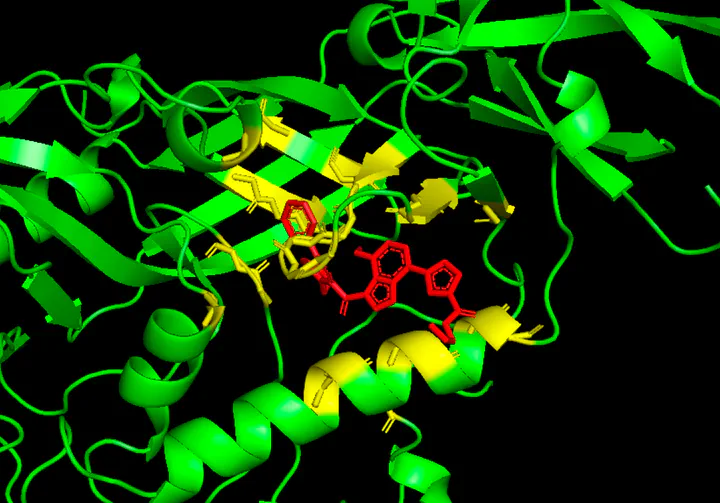
During the summer term project, an independent study was conducted to configure the AlphaFold network to generate cyclic peptides for various protein structures. In this previous study, the network successfully generated cyclic peptides targeting short-protein sequences with low RMSD values and comparable to literature generations. However, when the same network was applied to the larger gp120 trimer, the previous model exhibited high variability in the binding region, produced low-confidence or infeasible structures, and was largely unoptimized in the generation process (Figure 1). In response, a further research project was initiated to improve the precision of AlphaFold’s generative capabilities and its ability to target the HIV gp120 trimer.